The Philippines is still highly connected to imported pet food supply, but the scale of demand is becoming large enough for some distributors and investors to evaluate local production. According to Agriculture and Agri-Food Canada, Philippine pet food retail sales reached about 381.4 million USD in 2024 and are forecast to reach about 598.1 million USD by 2029, with estimated CAGR around 9.4%.
For macro context, World Bank data shows the Philippines' urban population at about 55.5% of total population in 2024. This does not directly measure pet food demand, but it supports the business logic behind city-based distribution, apartment pet ownership, modern retail and online repeat-purchase channels.
The strategic question is not only “where can we buy cheaper pet food?” For a mature importer or distributor, the better question may be: when does it make sense to convert market knowledge into a local pet food factory? Xinji Pet Food can support this evaluation with factory production, formula, QC and sales-route experience accumulated over more than 20 years.
1. When should a Philippine distributor think about a factory?
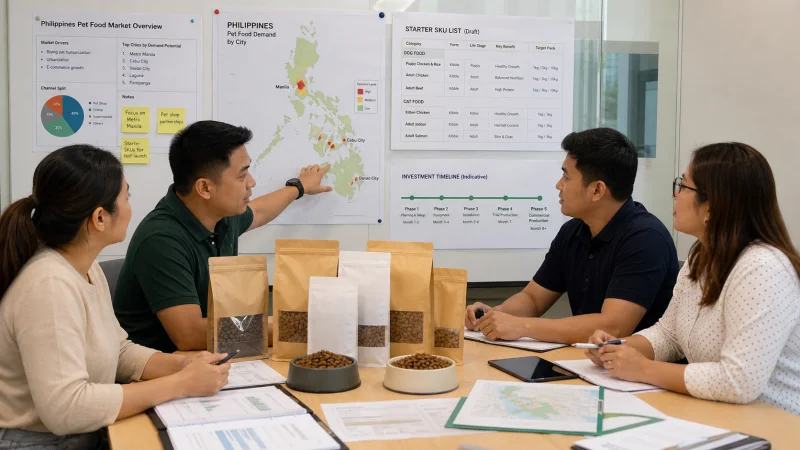
A local factory is not the first step for every company. It becomes relevant when an importer or distributor already knows which cities reorder, which pack sizes move, which price tier works and which customers need stable supply. If those signals are not clear, the safer path is to keep validating through pet food supplier, dog food wholesale and cat food wholesale channels before committing capital.
Good candidates include distributors with repeat demand, feed or agriculture companies entering pet food, brand owners planning local private label, and investors with warehouse, logistics or retail relationships. A factory should grow from proven sales, not from equipment enthusiasm.
2. Use channel knowledge before equipment selection
Philippine buyers often understand Metro Manila, Cebu, Davao and regional demand better than any overseas supplier. That channel knowledge should define starter SKUs, pack sizes, price points and packaging language. For example, a 1 kg cat food pack for urban online buyers has different cost and margin logic from a 10 kg dog food pack for regional distributors.
Before selecting an extrusion line, the team should map monthly volume assumptions by SKU, channel and city. This helps avoid overbuilding capacity or launching too many formulas at the same time.
3. Formula planning for a starter range
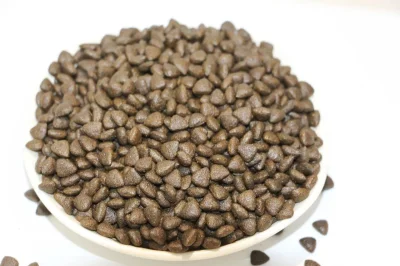
A realistic first range may include adult dog food, puppy food, adult cat food and kitten food. Each formula should be tested for nutrition target, kibble texture, coating, palatability, digestibility feedback and target cost per kilogram. The Philippines is price-sensitive in many channels, so the formula must match the buyer's shelf price and distributor margin.
Xinji can help connect formula structure with production feasibility. A formula that looks attractive in a lab may become difficult if ingredients are unstable, moisture control is weak or coating cannot be kept consistent.
4. Raw material and packaging assumptions
Local production still depends on reliable inputs. Protein meals, grains or starches, fats, palatants, vitamin-mineral premix and packaging films must be checked for cost, quality, MOQ, lead time and storage conditions. The same applies to cartons, retail bags and label compliance. A project plan should include backup suppliers before commercial launch.
Because the Philippines is an island market, logistics assumptions are especially important. A factory may solve some import lead time problems, but it still needs reliable inbound materials and outbound distribution.
5. Factory process and QC checkpoints
A dry pet food factory usually includes receiving, grinding, mixing, extrusion, drying, coating, cooling, screening, packing and finished goods storage. QC checkpoints should be placed at raw material receiving, post-mix, after drying, after coating, before packing and during storage.
Key records include batch number, formula version, moisture, kibble size, coating ratio, packaging seal, retained sample, complaint feedback and corrective action. These records are not paperwork for paperwork's sake; they help protect repeat orders and distributor trust.
6. Capital planning should include working capital
Equipment is only one part of the budget. A practical plan should include factory preparation, power, utilities, compressed air, warehouse, QC lab, staff training, raw material stock, packaging inventory, trial loss, regulatory checks, brand launch and working capital. The first months may consume cash before the sales cycle becomes stable.
A staged approach is usually safer: validate demand, develop formulas, run pilot batches, build the first production line, then expand capacity after repeat order data is clear.
7. How Xinji can support the transition
Xinji can help Philippine teams evaluate formula direction, trial samples, process flow, QC logic, packaging and commercial rollout. The goal is to transfer practical factory and market experience, not to push a generic equipment list. Teams still focused on own-brand launch can also compare the private label pet food route before investing in full production.
Teams evaluating this path can send project details through Pet Supply Philippines, including current import or distribution experience, target product categories, estimated volume, possible factory location, raw material assumptions and timeline.